Sales skills
Active Listening in Sales: Hear the Meaning Behind the Answer
The short answer: Active listening in sales means giving the buyer enough space to answer, noticing the facts and emotion in the answer, reflecting the meaning in your own words, and asking a follow-up that deepens or clarifies it.
Listening is not waiting for a keyword that unlocks your pitch. It is building an accurate model of the buyer's situation and checking that model in real time.
Pair this guide with Sales Follow-Up Calls That Create a Clear Next Step, then use the practice plan below to rehearse.
Listen on three levels
First, hear the facts: process, timing, people, tools, and numbers. Second, hear interpretation: what the buyer thinks is causing the problem. Third, hear emotion: frustration, caution, pride, uncertainty, or fatigue. The three layers often point to different follow-ups.
Do not diagnose emotion theatrically. A simple reflection-“It sounds like the unpredictability is the hardest part”-lets the buyer confirm or correct you.
Use the pause before the follow-up
Many buyers add the most useful detail after a brief silence. Count one beat after they finish. If they continue, you have earned depth without asking another question.
The pause also gives you time to choose a follow-up based on their answer rather than your prepared list. That shift is visible to buyers. They can tell when the next question would have arrived no matter what they said.
Reflect, label, and summarize
Reflection repeats the meaning in fewer words. Labeling names a possible concern. Summarizing connects several answers into a shared picture. Use each as a hypothesis, not a declaration.
For example: “So the manual work is annoying, but the real concern is that no one trusts the weekly number. Have I got that right?” The buyer can refine the statement, and the correction often reveals the true buying motive.
Take notes without leaving the conversation
Capture the buyer's phrases, not a transcript. Write short markers for current state, problem, impact, priority, people, and next step. If you need a moment, say so: “That is useful-I am writing it down.”
End with a spoken summary and ask for corrections. Good notes support listening; they should not become a hiding place from eye contact, vocal cues, or the next question.
Practice plan
Run the no-pitch listening drill
Spend five minutes in discovery without describing your product.
- Ask one open current-state question.
- Pause for a full beat after each answer.
- Reflect the meaning before asking the next question.
- Use one exact phrase from the buyer in your summary.
- Ask the buyer to correct your summary.
- Review every moment where you wanted to pitch and write a follow-up question instead.
Frequently asked questions
Why is active listening important in sales?
It improves diagnosis, helps buyers feel understood, and prevents irrelevant pitching. It also reveals the language and priorities needed for a useful recommendation.
What are examples of active listening in a sales call?
Pausing, reflecting the buyer's meaning, labeling a possible concern, summarizing several points, and asking the buyer to correct your understanding.
How can I listen while taking notes?
Capture short phrases under a few categories instead of transcribing. Tell the buyer when you pause to write something important, then return attention to the conversation.
Turn the idea into a reflex
Read less. Rehearse more.
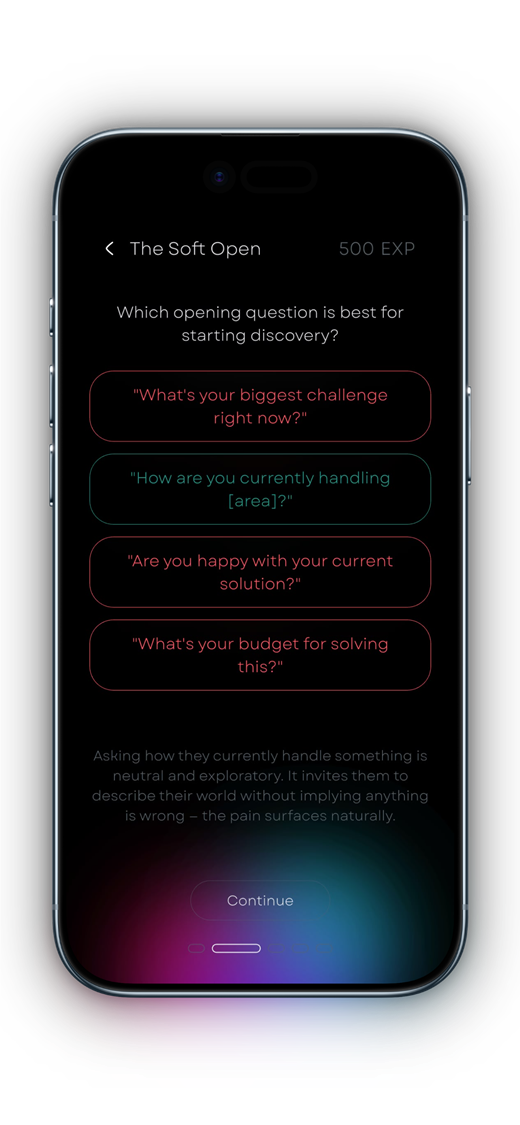
Put one idea from this guide into a spoken practice call. Salesy: AI Sales Roleplay brings lessons, AI voice prospects and post-call feedback to iPhone and iPad. Choose an available scenario and work on your next response.
Get Salesy on the App StoreFree to download. In-app purchases available.