Cold calling
Cold Call Opening Lines That Earn the Next 30 Seconds
The short answer: A strong cold call opener identifies you quickly, gives the call a relevant reason, and asks for a small amount of attention. It should sound like a person starting a conversation, not a script trying to hide that the call is cold.
The first line does not need to close the deal. It has one job: keep the prospect from making an automatic exit. That means clarity beats cleverness, relevance beats enthusiasm, and a calm delivery beats a perfect string of words.
Pair this guide with Cold Calling Scripts: A Flexible Framework for Real Conversations, then use the practice plan below to rehearse.
The anatomy of a strong cold call opener
Start with the information the buyer is already trying to place: who you are, where you are calling from, and why this might concern them. Hiding those facts creates suspicion. Stating them cleanly lowers the amount of mental work required to understand the call.
Then make a small request rather than a large one. You are asking for enough attention to test relevance, not asking the prospect to agree to a meeting before they know why. A useful structure is: identity → relevant observation → permission to continue.
- “Hi Maya, this is Leo from Acme. I noticed your team is hiring five SDRs. Mind if I take 30 seconds to explain why I called?”
- “Jordan, Leo here with Acme. We work with support leaders who are trying to reduce backlog without adding headcount. Is that on your radar?”
Four opening patterns worth rehearsing
A permission-based opener works when you can deliver it without sounding timid. A relevance opener connects the call to a visible change. A problem opener names a familiar operational issue. A referral opener uses a real introduction or internal direction. Each pattern earns attention in a different way, so match it to the information you actually have.
Do not manufacture familiarity. “We have not spoken before” can be disarming because it removes the prospect's need to remember you. Honest language also makes the next sentence easier to trust.
- Permission: ask for 20–30 seconds and promise a clear reason.
- Relevance: connect to a hiring push, role change, launch, or stated priority.
- Problem: name a recognizable problem and ask how they handle it today.
- Referral: say who pointed you there and why, without inflating the relationship.
Opening lines that trigger resistance
“How are you today?” is not forbidden, but from an unknown caller it often sounds like a runway into a pitch. “Did I catch you at a bad time?” makes “yes” the easiest answer. A long company biography delays the only thing the prospect cares about: why this call might matter.
The deeper problem is delivery. A good line spoken too quickly still feels unsafe. Leave a beat after your name. End declarative statements downward rather than lifting every sentence into a question. The prospect should hear that you are comfortable whether the answer is yes or no.
How to move from the opener into discovery
When the prospect gives you space, do not spend it on a feature list. Bridge directly into a question about their current situation: “How are you handling that today?” or “What tends to happen when volume spikes?” The opener creates permission; the question creates a conversation.
If the answer reveals no problem, acknowledge it. A clean exit protects your credibility and your future follow-up. If the answer reveals friction, reflect the prospect's words before asking the next question. That signals that this is a diagnosis, not a pitch waiting to escape.
Practice plan
Run the 12-opener drill
Choose one prospect type and practice three opening patterns four times each. Keep the context fixed so you can hear the effect of the words and delivery.
- Say each opener once at normal speed and record it.
- Repeat it 10% slower with a full beat after your name.
- Have the practice prospect interrupt with “What is this about?”
- Answer in one sentence, then ask one current-state question.
- Keep the version that sounds most like you on a good day.
Frequently asked questions
What is the best cold call opening line?
The best opener is specific to the prospect and easy to understand: identify yourself, name a relevant reason, and ask for a small amount of attention. There is no universal sentence that removes the need for relevance and delivery.
Should I ask if it is a bad time?
Usually no. The question invites an automatic yes. Ask for a small, defined amount of time instead, such as 30 seconds to explain why you called.
How long should a cold call opener be?
Aim for roughly 10–20 seconds. It should be long enough to establish relevance and short enough that the prospect can respond before feeling trapped.
Turn the idea into a reflex
Read less. Rehearse more.
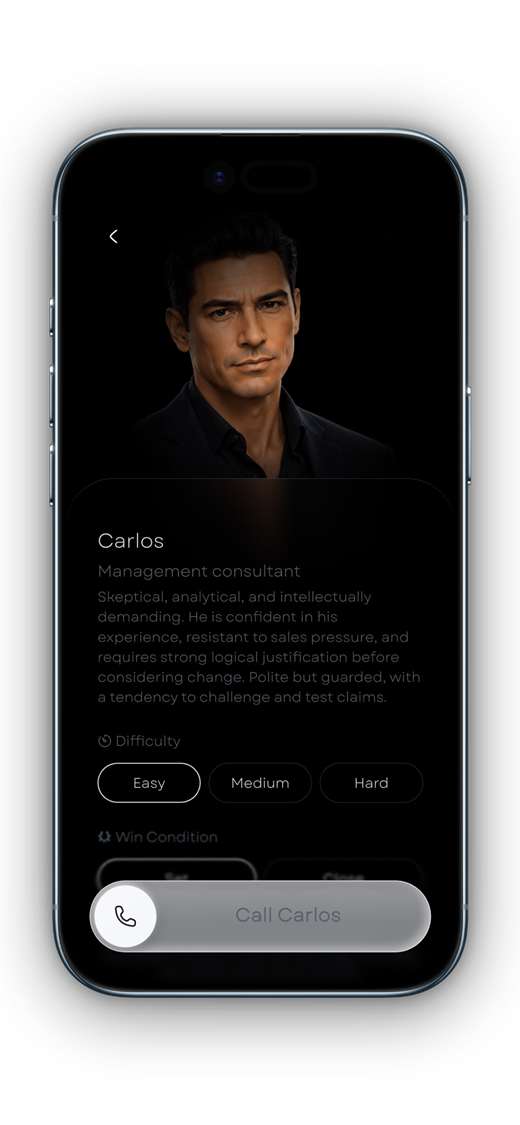
Put one idea from this guide into a spoken practice call. Salesy: AI Sales Roleplay brings lessons, AI voice prospects and post-call feedback to iPhone and iPad. Choose an available scenario and work on your next response.
Get Salesy on the App StoreFree to download. In-app purchases available.