Objection handling
How to Handle “Not Interested” on a Cold Call
The short answer: When a prospect says “not interested,” lower pressure and ask one brief question to learn whether the issue is relevance, timing, satisfaction with the status quo, or the interruption itself. If the no is clear, respect it and end the call professionally.
“Not interested” often arrives before the prospect has enough information to evaluate the offer. It may mean “I am busy,” “I do not recognize the problem,” or simply “no.” Your response should create clarity without turning consent into a debate.
Pair this guide with How to Handle “We Already Have a Vendor”, then use the practice plan below to rehearse.
Make the first response smaller
Acknowledge the answer: “Understood.” Then ask permission for one question or offer a specific distinction: “Is that because the problem is already handled, or because this is not a priority?” The buyer can answer quickly and still control the call.
Your tone matters more than clever wording. If the response sounds like a trap, resistance rises. Deliver the question as someone willing to hear a real no.
Diagnose the kind of disinterest
If the buyer is satisfied with the current process, ask what works well and whether anything remains difficult. If timing is wrong, ask what would need to change. If the problem is irrelevant, thank them and update your qualification assumptions.
A weak list creates more “not interested” objections than a weak rebuttal. Track patterns by segment, role, and trigger. The data may tell you to change targeting rather than train a more persistent response.
Use one relevance statement, not a second pitch
If the prospect misunderstood the reason for the call, restate it in one sentence using a problem they recognize. Then stop. A compressed restatement gives the buyer something concrete to accept or reject.
Avoid piling on benefits. The goal is not to overwhelm the objection with information. It is to determine whether a relevant conversation exists.
Know when to leave the call
A repeated no is an answer. Thank the buyer and end the call. Respectful exits protect the brand and keep the rep from carrying a combative tone into the next conversation.
Log the reason accurately. “Not interested” without context teaches little; “not responsible for this,” “renewed incumbent,” or “priority moved to next year” can improve future targeting and timing.
Practice plan
Practice the one-question limit
Train yourself to seek clarity without turning the call into a contest.
- Hear “not interested” without interrupting.
- Acknowledge it in two or three words.
- Ask one diagnostic question.
- If the buyer answers, respond to that reason.
- If they repeat the no, thank them and end the scene.
- Review whether your tone left genuine room for refusal.
Frequently asked questions
What is a good response to “not interested”?
“Understood-before I let you go, is that because you already have this handled or because it is not a priority?” Keep the tone low-pressure and accept a repeated no.
How many times should I push after a prospect says no?
Do not treat it as a fixed number. One respectful clarifying question is often enough. A clear or repeated no should end the call.
Why do I hear “not interested” so often?
The cause may be targeting, timing, an unclear opener, or a genuinely irrelevant offer. Review patterns across calls before assuming the solution is a stronger rebuttal.
Turn the idea into a reflex
Read less. Rehearse more.
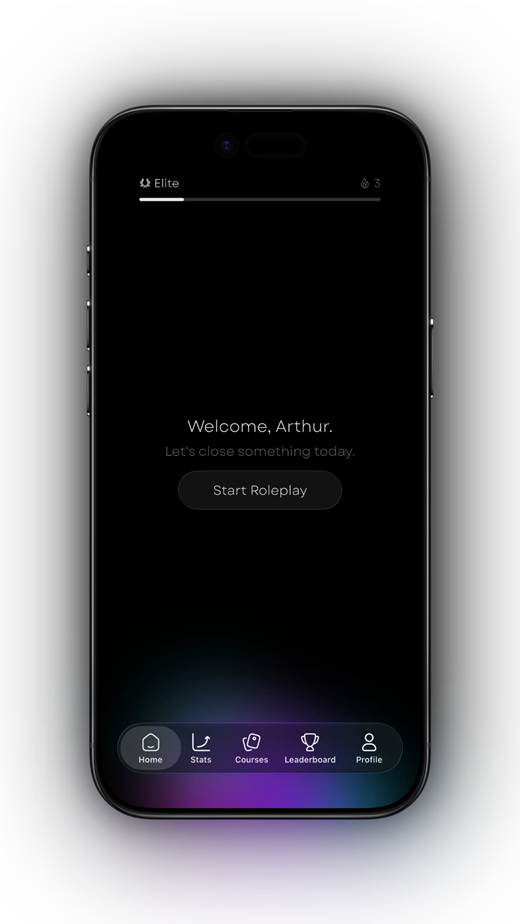
Put one idea from this guide into a spoken practice call. Salesy: AI Sales Roleplay brings lessons, AI voice prospects and post-call feedback to iPhone and iPad. Choose an available scenario and work on your next response.
Get Salesy on the App StoreFree to download. In-app purchases available.