Sales skills
How to Build Rapport on a Sales Call Without Forced Small Talk
The short answer: Rapport on a sales call comes from making the conversation easy to understand and safe to participate in. Prepare, explain why the call matters, respect time, listen closely, use the buyer's language accurately, and avoid pretending to know them.
Rapport is often taught as a clever opening comment about weather, sports, or something found on a profile. Buyers usually experience trust more directly: you are prepared, you listen, and you do what you said you would do.
Pair this guide with Mirroring and Labeling in Sales: Use the Techniques Naturally, then use the practice plan below to rehearse.
Earn rapport through relevance
State the purpose of the conversation and connect it to a real reason the buyer may care. If the call is cold, say who you are and why you reached out. Clarity lowers the buyer's effort and gives them a fair choice about continuing.
Personalization should support relevance. A hiring announcement or stated initiative can explain timing. A personal fact that has nothing to do with the conversation can feel intrusive. Do not manufacture familiarity or imply a relationship that does not exist.
Show that the buyer's answer changed the conversation
Use the buyer's words when you summarize, then ask whether you understood. Build the next question from their answer. This is stronger evidence of attention than repeating their last few words automatically.
Respect corrections and disagreement. If an assumption is wrong, thank the buyer for correcting it and update your view. Defending weak research damages rapport faster than the original mistake.
Make reliability part of rapport
Keep the call within the agreed time or ask before extending it. Send the information you promised. Confirm next steps accurately. Small acts of reliability make the relationship easier to continue.
Practice rapport by giving the roleplay buyer different communication preferences: brief and direct, reflective and detailed, or skeptical of unfamiliar claims. Adapt your pace and level of detail without imitating personality or abandoning clarity.
Practice plan
Practice rapport without small talk
Run a short conversation in which trust must come from the work itself.
- Open with identity, purpose, and a relevant reason.
- Ask how the buyer handles the situation today.
- Use one phrase from the answer in a follow-up question.
- Summarize and invite correction.
- Close at the agreed time with a clear next action or a respectful exit.
Frequently asked questions
Is small talk necessary for sales rapport?
No. Natural small talk can be fine, but relevance, listening, respect, and reliability are stronger foundations for trust.
How do I build rapport on a cold call?
Be transparent about who you are, give a concise relevant reason, respect the prospect's time, and respond directly to what they say.
Can mirroring help rapport?
Matching the buyer's preferred pace and level of detail can help. Avoid obvious imitation or repeating words mechanically.
Turn the idea into a reflex
Read less. Rehearse more.
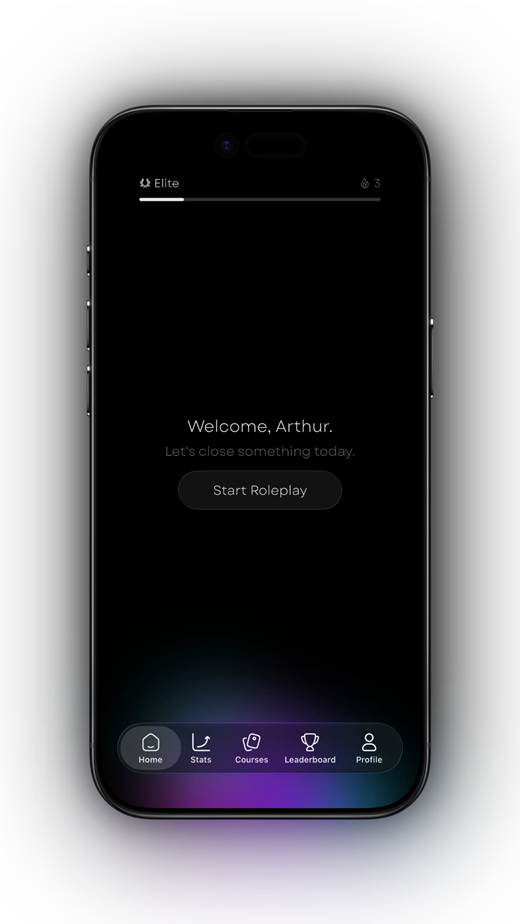
Put one idea from this guide into a spoken practice call. Salesy: AI Sales Roleplay brings lessons, AI voice prospects and post-call feedback to iPhone and iPad. Choose an available scenario and work on your next response.
Get Salesy on the App StoreFree to download. In-app purchases available.