Sales coaching
Sales Onboarding Plan: From Product Knowledge to Call Practice
The short answer: A useful sales onboarding plan moves from customer and product understanding into guided conversation practice, supervised application, and regular coaching. Readiness should be based on observable behaviors and accurate knowledge, not course completion alone.
New reps often receive information in the order it is stored rather than the order they need it. A better plan connects what the company knows to what the rep must recognize, say, ask, and do in a customer conversation.
Pair this guide with Account Executive Training: Practice the Decisions Between Calls, then use the practice plan below to rehearse.
Build the customer and product foundation
Start with the customer, their current process, common problems, desired outcomes, alternatives, and reasons the product may not fit. Then teach the product through those situations. Reps should know the limits of approved claims and where to find current answers.
Include systems, data handling, compliance, pricing authority, handoffs, and documentation. Conversation skill cannot compensate for inaccurate product or policy information.
Sequence practice from moments to full calls
Begin with small moments: the opener, first discovery question, a common objection, and a next-step summary. Short drills make feedback easier to use. Add fuller calls only after the component behaviors are recognizable.
Use realistic roleplays with cooperative, vague, skeptical, and no-fit buyers. New reps need practice qualifying out as well as advancing opportunities. Provide immediate retries after focused feedback.
Define readiness with evidence
A readiness check can combine knowledge verification, roleplay, system use, written follow-up, and supervised calls. Publish the criteria early. Use more than one scenario so a memorized script does not masquerade as judgment.
Once the rep begins live work, continue short reviews and practice. Onboarding ends as a program, but the feedback loop should remain. Adjust the plan using evidence from cohorts rather than one loud anecdote.
Practice plan
Build a four-stage onboarding path
Define what a rep must understand and demonstrate at each stage.
- Stage one: customer, problem, product, limits, and systems.
- Stage two: focused drills for opening, discovery, objections, and next steps.
- Stage three: full roleplays with several buyer types.
- Stage four: supervised live application and call review.
- Set evidence-based criteria for moving between stages.
Frequently asked questions
What should a sales onboarding plan include?
Include customer context, product knowledge, tools, process, compliance, conversation skills, practice, supervised application, feedback, and readiness criteria.
How long should sales onboarding take?
The timeline depends on product complexity, sales cycle, regulation, and role. Define staged readiness instead of assuming one duration fits every team.
When should new reps start roleplay?
Start focused roleplay after they have enough customer and product context to practice accurately. Increase complexity as knowledge and judgment develop.
Turn the idea into a reflex
Read less. Rehearse more.
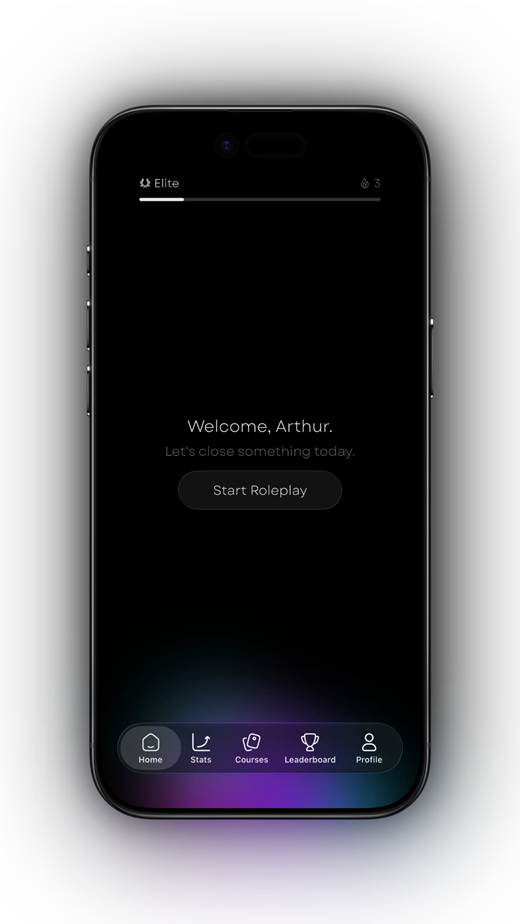
Put one idea from this guide into a spoken practice call. Salesy: AI Sales Roleplay brings lessons, AI voice prospects and post-call feedback to iPhone and iPad. Choose an available scenario and work on your next response.
Get Salesy on the App StoreFree to download. In-app purchases available.