Sales skills
Sales Storytelling: Turn Proof Into a Relevant Buyer Story
The short answer: A useful sales story has four parts: a customer in a recognizable situation, a specific problem, the change they made, and a credible result. Keep it short and connect it explicitly to the buyer's stated concern.
Stories help buyers imagine change, but only when the story resembles the decision in front of them. A famous logo with an unrelated use case is weaker than a modest example with the same workflow and risk.
Pair this guide with How to Build Rapport on a Sales Call Without Forced Small Talk, then use the practice plan below to rehearse.
Use situation, friction, change, result
Set the situation in one sentence. Describe the operational friction and why it mattered. Explain the change without turning the middle into a product tour. Finish with a result you can support and any relevant limits.
The buyer should understand the story in under a minute. Extra history, feature detail, and praise dilute the evidence.
Match the story to the buyer's concern
Choose stories by similarity of problem, process, risk, and desired outcome. Industry can matter, but a shared operating constraint may matter more.
Introduce the story with the connection: “You mentioned inconsistent ramp time. Another team with the same issue changed how reps practiced before live calls.” This tells the buyer why they should listen.
Keep proof accurate and inspectable
Use approved facts and distinguish measured results from customer impressions. Do not remove context that changes the meaning, such as implementation time or a concurrent process change.
After the story, ask what feels similar or different. The buyer's answer turns a broadcast into discovery and prevents you from assuming the example settles the decision.
Practice plan
Build a 45-second customer story
Choose one approved customer example and remove every detail that does not support the buyer's decision.
- Describe the customer situation in one sentence.
- Name the specific friction and impact.
- Explain the change in plain language.
- State the supported result and context.
- Finish with a question about similarity.
Frequently asked questions
How long should a sales story be?
Often 30–60 seconds in conversation. Use only the detail needed to make the problem, change, and result credible.
When should I use storytelling in sales?
Use it when a buyer needs a concrete example of a relevant change, risk, implementation path, or result.
What if I cannot name the customer?
Use an anonymized description only when permitted, provide enough context to make it useful, and avoid implying evidence you cannot support.
Turn the idea into a reflex
Read less. Rehearse more.
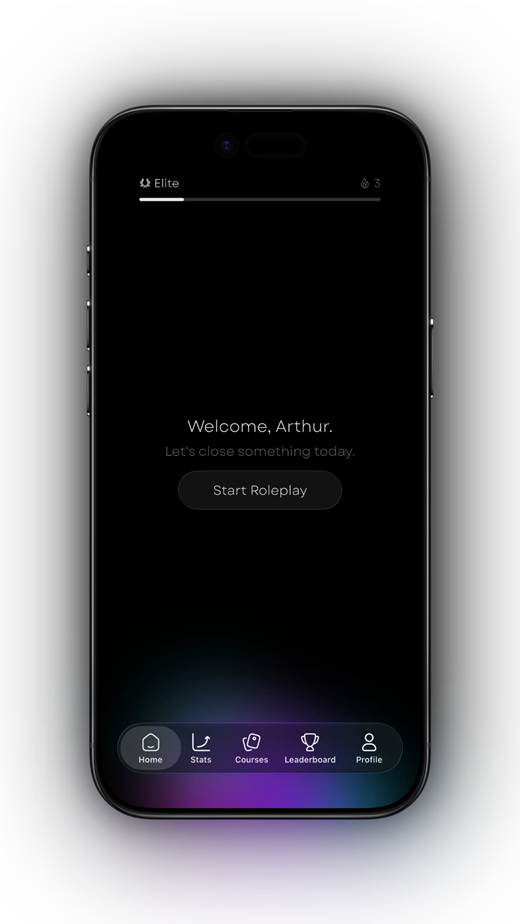
Put one idea from this guide into a spoken practice call. Salesy: AI Sales Roleplay brings lessons, AI voice prospects and post-call feedback to iPhone and iPad. Choose an available scenario and work on your next response.
Get Salesy on the App StoreFree to download. In-app purchases available.