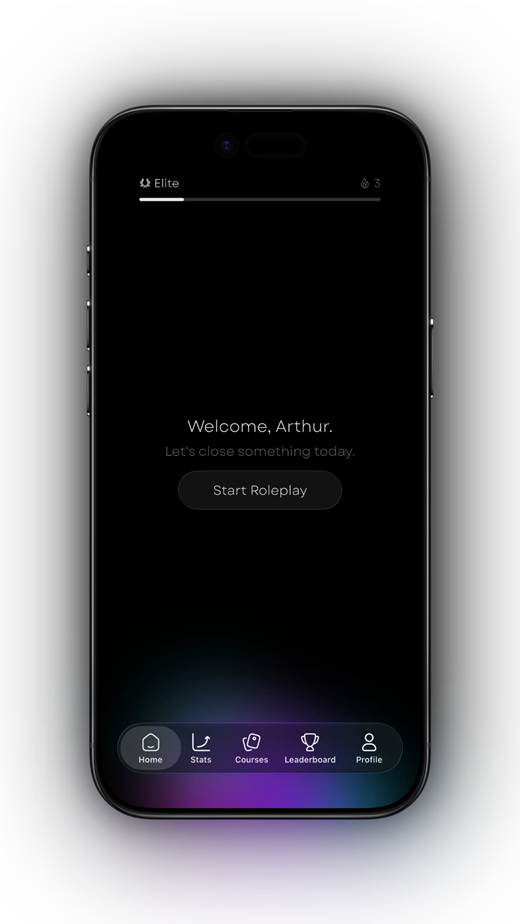
AI sales training
AI Sales Roleplay Software: A Practical Buyer Checklist
The short answer: Choose AI sales roleplay software by piloting one real scenario from setup through replay. Evaluate buyer behavior, voice interaction, custom scenarios, evidence behind feedback, manager workflow, reporting, integrations, security, accessibility, pricing, and how practice will connect to real-call coaching.
Roleplay platforms often look similar during a polished demo. The differences become clearer when your team builds a buyer from its own sales motion, watches the persona handle an unexpected but relevant question, reviews the score, and tries to coach the next attempt.
Pair this guide with Sales Training Software: Choose Lessons, Practice or Coaching, then use the practice plan below to rehearse.
Separate personal practice from team software
An individual rep may need quick voice practice, ready-made scenarios, feedback, and a mobile routine. A sales enablement team may also need custom personas, assignments, permissions, calibration, dashboards, integrations, multilingual support, and procurement controls. Write the required workflow before comparing vendors.
Decide whether the product will support onboarding, ongoing coaching, certification, pre-call rehearsal, or several of these jobs. Each use case changes the scenario depth, evidence, reporting, and administration you need.
Pilot the complete practice loop
Build one scenario from a recurring conversation. Give the buyer a role, context, hidden concern, boundaries, and realistic next step. Ask several reps to run the same scenario and deliberately test an unexpected question, an interruption, and a respectful exit.
Inspect whether the AI stays in character, follows the hidden facts, responds to the rep's actual words, and behaves consistently enough for a replay. Perfect human imitation is not required, but the simulation must support the behavior you intend to teach.
Inspect scoring, evidence, and calibration
A score should point back to a transcript, recording, or specific exchange. Test false positives and false negatives by having a subject-matter expert review the same attempts. Confirm whether managers can adjust criteria, weight behaviors, and distinguish required product facts from coaching preferences.
Plan calibration before using scores for certification or comparison. AI feedback can miss context, and a stable number is not automatically a valid measure. Keep human review for consequential decisions and ambiguous calls.
Check the manager and rep workflow
Ask how long it takes to create a scenario, assign it, complete it, find the relevant moment, coach it, and run another attempt. Reporting should help a manager find patterns and coaching needs, not merely display activity totals.
Check roles and permissions, SSO needs, LMS or CRM connections, exports, accessibility, supported devices, languages, support, and the process for updating content. An integration matters only if it removes a real step from the training workflow.
Review privacy, security, and content governance
Map what the platform records, where data is processed, how long it is retained, who can access it, and whether customer or employee information is used for model training. Involve the appropriate privacy, security, legal, and employee stakeholders for your organization and location.
Use synthetic buyer details during early evaluation. Establish owners and review dates for scenarios, scoring rules, prices, claims, and product information so practice does not reinforce outdated or unapproved messages.
Measure adoption, learning, transfer, and outcome separately
Track whether assigned users complete practice, whether the target behavior changes across comparable attempts, and whether the behavior appears in relevant real calls. Business outcomes such as ramp time, conversion, or deal movement have many influences, so document the baseline and avoid claiming that roleplay caused every change.
Start with a small cohort and a narrow skill. Interview reps and managers about friction, review score quality, and decide what to change before a wider rollout. For the broader category, see the sales training software guide.
Practice plan
Design a fair software pilot
Use one real training need and test every step your team will perform.
- Define the users, behavior, scenario, and baseline evidence.
- Build one buyer with hidden facts and clear boundaries.
- Have several reps run the same first attempt and replay.
- Compare automated feedback with expert review.
- Assess workflow, governance, adoption, and real-call transfer before buying.
Frequently asked questions
What is AI sales roleplay software?
It is training software that simulates a buyer conversation, lets a rep respond by voice or text, and provides feedback or scoring after the attempt.
How is a sales roleplay app different from a platform?
An app may focus on individual practice. A team platform commonly adds custom content, assignments, permissions, manager review, reporting, integrations, and procurement controls.
What should I test in an AI roleplay pilot?
Test buyer consistency, voice behavior, scenario creation, feedback evidence, calibration, replay, manager workflow, accessibility, privacy, security, pricing, and transfer to real calls.
Turn the idea into a reflex
Read less. Rehearse more.
Put one idea from this guide into a spoken practice call. Salesy: AI Sales Roleplay brings lessons, AI voice prospects and post-call feedback to iPhone and iPad. Choose an available scenario and work on your next response.
Get Salesy on the App StoreFree to download. In-app purchases available.