Objection handling
How to Handle “Call Me Next Quarter”
The short answer: When a buyer says to call next quarter, ask what will be different then and whether any preparation must happen earlier. If the timing is real, agree on a specific checkpoint and purpose. If nothing will change, treat it as a likely no rather than an active deal.
Future timing can reflect a real budget cycle, contract renewal, project dependency, or workload constraint. It can also be a low-friction exit. The difference is whether the buyer can name the event and decision work.
Pair this guide with Objection Handling Practice: Drills for Calm, Useful Responses, then use the practice plan below to rehearse.
Find the event behind the date
Ask what changes next quarter: budget, capacity, leadership attention, a renewal, or another project. A date attached to an event is more useful than a date alone.
If the buyer cannot name a change, offer an easy close: “It sounds like this may not be a priority. Would it be better for me to close the loop?” Clarity protects both calendars.
Work backward from the real decision
Some decisions require security review, data gathering, stakeholder alignment, or procurement before the target quarter. Ask when evaluation would need to begin to support the buyer's date.
Do not use process complexity to manufacture urgency. Use it to create an accurate plan or reveal that the target is not yet serious.
Schedule a checkpoint with a purpose
Agree on what the future call will decide or review. Send a short note that records the trigger, any preparation, and the date. Then avoid generic check-ins before the agreed point unless relevant conditions change.
Move the opportunity to a realistic status. A calendar reminder is not the same as an active buying process.
Practice plan
Practice timing without pressure
Use three different reasons for a next-quarter request.
- Budget opens on a known date.
- A prerequisite project is delayed.
- The buyer wants to end the conversation politely.
- Ask what changes and what must happen first.
- Choose an active plan, nurture checkpoint, or close.
Frequently asked questions
What should I ask when a prospect says next quarter?
Ask what will be different then, what event sets the timing, and whether evaluation work needs to begin earlier.
Should I put the follow-up on the calendar?
Yes if the buyer agrees and the meeting has a clear purpose. A vague calendar hold without a trigger may not create real commitment.
Is a future follow-up a qualified opportunity?
Only if there is meaningful need, a credible trigger, and a workable decision plan. Otherwise, treat it as nurture rather than active pipeline.
Turn the idea into a reflex
Read less. Rehearse more.
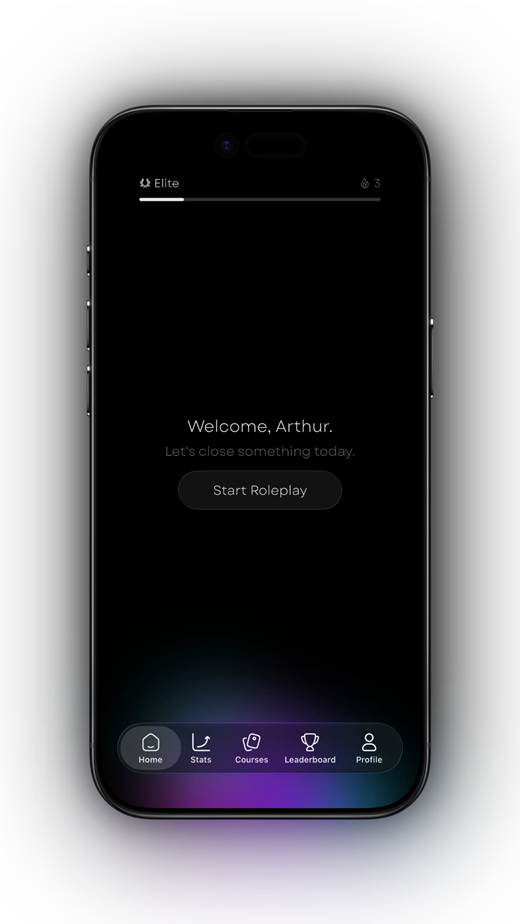
Put one idea from this guide into a spoken practice call. Salesy: AI Sales Roleplay brings lessons, AI voice prospects and post-call feedback to iPhone and iPad. Choose an available scenario and work on your next response.
Get Salesy on the App StoreFree to download. In-app purchases available.