Objection handling
Sales Objection Handling: A Practical Guide to Better Responses
The short answer: Handle a sales objection by acknowledging it, clarifying what the buyer means, answering the real concern, and checking whether the concern is resolved. Treat the objection as information to understand rather than an argument to win.
An objection is often a compressed sentence. “Too expensive” can mean no budget, low perceived value, a cheaper alternative, or fear of making the wrong decision. The response improves when you expand the sentence before answering it.
Pair this guide with How to Handle the “Too Expensive” Sales Objection, then use the practice plan below to rehearse.
Use the A-C-R-C objection framework
Start with acknowledge: show that you heard the concern without instantly agreeing or becoming defensive. Then clarify: ask a short question that separates possible meanings. Respond to the meaning you uncover. Finally, confirm whether the answer changed anything.
The sequence matters. A polished answer delivered before clarification may solve the wrong problem. One extra question often saves two minutes of unnecessary explanation.
- Acknowledge: “That makes sense to look at carefully.”
- Clarify: “When you say expensive, what are you comparing it with?”
- Respond: address that comparison with relevant evidence.
- Confirm: “Does that answer the concern, or is there another part we should look at?”
Separate conditions, concerns, and brush-offs
A condition is a real limit, such as a fixed regulatory requirement or budget that cannot move this year. A concern is uncertainty that can be resolved with evidence or a plan. A brush-off is an attempt to end the interaction with minimal friction. Each needs a different response.
You discover the type through calm questions, not by challenging the buyer's honesty. If the condition is real, qualify out or plan around it. If it is a concern, solve it. If it is a brush-off, earn one small piece of truth and respect the answer.
Avoid the three common objection mistakes
First, do not interrupt. The buyer may explain the objection if given another second. Second, do not stack rebuttals. Too many points sound like panic and make it hard to know which answer mattered. Third, do not use manipulative labels such as “Is price the only thing stopping you?” before you understand the decision.
Keep your first response shorter than the objection. Acknowledge, ask, listen. When you do answer, connect the answer to something the buyer already said rather than delivering a generic battle card.
Build an objection library from real calls
Write objections exactly as buyers say them. Group them by underlying concern: relevance, timing, trust, money, authority, effort, or status quo. For each group, prepare one clarifying question, one concise response, and one confirmation question.
Then practice variations. Real buyers rarely use the wording on your battle card. Rehearsing the pattern makes your response flexible enough to survive different phrasing and emotional intensity.
Practice plan
Run the objection loop
Use one objection for five consecutive attempts. Change only the underlying reason each time.
- Attempt one: the objection is a polite brush-off.
- Attempt two: the buyer lacks budget.
- Attempt three: the buyer doubts the value.
- Attempt four: the buyer fears implementation work.
- Attempt five: the buyer has a satisfied incumbent.
- Score whether your clarifying question identified the difference.
Frequently asked questions
What are the most common sales objections?
Common objections concern price, timing, relevance, trust, authority, implementation effort, and satisfaction with the current solution. The wording varies, but the underlying categories repeat.
Should I overcome every objection?
No. Some objections reveal a genuine lack of fit or an immovable condition. Good objection handling helps both sides reach a clear decision; it does not force every buyer forward.
How do I practice objection handling?
Pick one objection, vary the reason behind it, and rehearse acknowledge, clarify, respond, and confirm. Immediate repetition helps the structure become automatic.
Turn the idea into a reflex
Read less. Rehearse more.
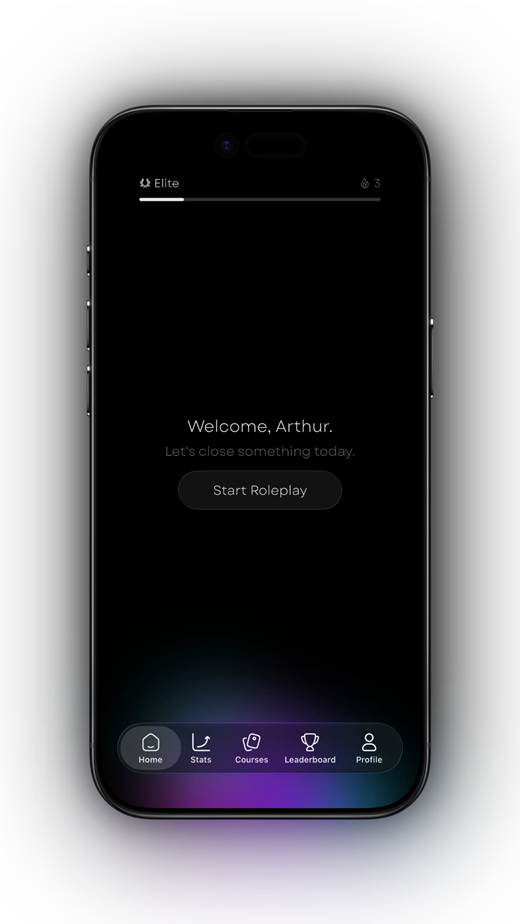
Put one idea from this guide into a spoken practice call. Salesy: AI Sales Roleplay brings lessons, AI voice prospects and post-call feedback to iPhone and iPad. Choose an available scenario and work on your next response.
Get Salesy on the App StoreFree to download. In-app purchases available.