Sales practice
Sales Training for Beginners: The Skills to Learn First
The short answer: Beginners should learn five sales skills first: starting a clear conversation, asking discovery questions, listening and summarizing, handling common objections, and requesting a specific next step. Learn each skill through short explanation followed by repeated spoken practice.
Sales becomes overwhelming when a new rep tries to master prospecting, discovery, demos, negotiation, and closing at once. A smaller sequence builds a usable foundation faster.
Pair this guide with Sales Roleplay Scorecard: What to Measure in a Practice Call, then use the practice plan below to rehearse.
1. Learn to start a clear conversation
Practice saying who you are, why you reached out, and what question makes the conversation relevant. The aim is not charisma. It is reducing confusion in the first seconds.
Use short sentences and real language. New reps often overcompensate with jargon because they think expertise must sound complex. Buyers usually trust clarity more.
2. Learn to diagnose before presenting
Ask how the buyer works today, where the process becomes difficult, and what that changes. Follow the answer rather than racing through a list. A good beginner target is to understand one problem deeply enough to summarize it accurately.
Delay the product explanation until you know which part matters. This habit prevents feature dumping and makes later recommendations easier to understand.
3. Learn to stay calm around resistance
Objections are normal information, not proof that the call failed. Practice acknowledging the concern and asking what the buyer means before answering. Begin with price, timing, “not interested,” and an existing vendor.
Rehearse the first five seconds after the objection. That is where new reps rush, argue, or fill the silence. A calm acknowledgment keeps the conversation usable.
4. Learn to ask for a next step
A call can feel pleasant and still go nowhere. Summarize what you heard, connect the next step to an open question, and ask directly. Make the step specific enough that both sides know why it exists.
Review behavior after each call: Did you ask the planned question? Did you reflect the buyer's words? Did you make the ask? These measures improve faster than judging your identity as “good” or “bad” at sales.
Practice plan
Follow the beginner's daily ten
Use ten minutes to build one small part of the conversation every workday.
- Two minutes: review one concept.
- Two minutes: listen to or read one call example.
- Four minutes: run the same roleplay twice.
- One minute: name the behavior to keep.
- One minute: choose where to use it on a live call.
Frequently asked questions
What should a beginner learn first in sales?
Start with clear openings, discovery questions, active listening, common objections, and direct next-step asks. These skills support almost every sales motion.
Can I learn sales without experience?
Yes. Use roleplay and call review to build pattern recognition before you have a large volume of live opportunities. Real conversations then refine the skill.
How long does it take to get comfortable in sales?
The timeline varies by role and call volume. Frequent focused practice usually creates noticeable comfort faster than relying on live calls alone.
Turn the idea into a reflex
Read less. Rehearse more.
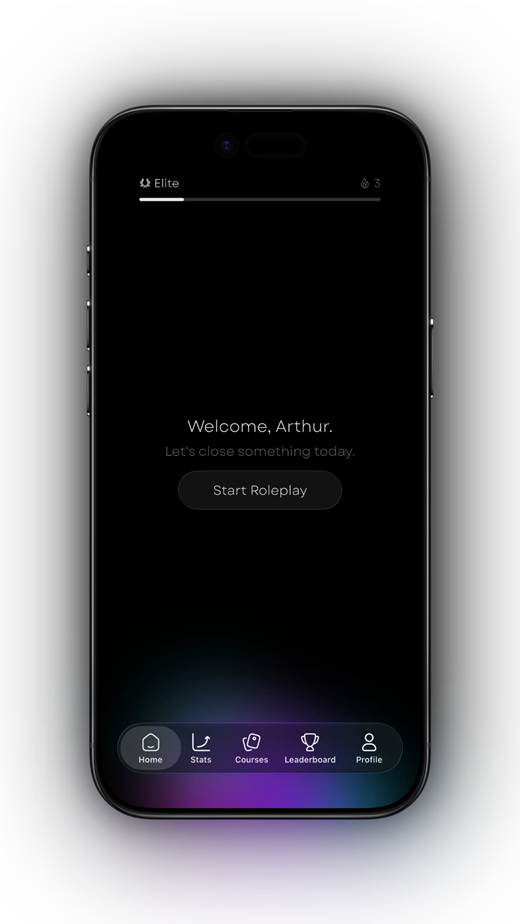
Put one idea from this guide into a spoken practice call. Salesy: AI Sales Roleplay brings lessons, AI voice prospects and post-call feedback to iPhone and iPad. Choose an available scenario and work on your next response.
Get Salesy on the App StoreFree to download. In-app purchases available.