Sales coaching
A 30-Day SDR Training Plan Built Around Daily Reps
The short answer: A strong 30-day SDR training plan progresses from message and customer knowledge to isolated call drills, supervised live calls, objection handling, and independent call blocks. Every week should combine instruction, examples, spoken reps, and feedback.
New SDRs do not need thirty days of content before they speak to a prospect. They need a safe progression from understanding the market to performing small parts of the job, with feedback close to the attempt.
Pair this guide with Sales Coaching Questions That Help Reps Find the Fix, then use the practice plan below to rehearse.
Week 1: customer, problem, and message
Teach the customer before the script. Reps should understand the buyer's role, current process, common pressures, and reason to change. Then connect product capabilities to those problems.
Practice the opener, reason for the call, and two current-state questions. End the week with short roleplays and a small number of observed live dials, not a high-volume target.
- Listen to representative call clips.
- Write the value message in the rep's own words.
- Practice openers and voicemail.
- Pass a basic customer and qualification check.
Week 2: discovery and call control
Add question sequencing, active listening, notes, and call transitions. Use scenarios where the buyer gives incomplete answers so the rep must follow up rather than recite.
Increase live call volume in focused blocks. Review a small sample quickly. The rep should leave each review with one behavior to use in the next block.
Week 3: objections and recovery
Build the objection library from real calls. Practice acknowledge, clarify, respond, and confirm across price, timing, relevance, incumbent, and email brush-offs.
Add difficult-call recovery: interruptions, hang-ups, and conversations that go off script. The goal is a calm next response, not a perfect save on every call.
Week 4: consistency and independence
Have the rep plan and run complete call blocks, review their own work, and identify a skill priority. Managers can compare self-assessment with observed behavior and correct blind spots.
Certification should use realistic calls and observable criteria. Product recall alone does not prove call readiness. End with a 30-day improvement target based on the rep's actual pattern.
Practice plan
Use the explain–observe–rehearse–apply loop
Repeat the same learning loop for every new SDR skill.
- Explain the behavior and why it matters.
- Observe a good and bad call example.
- Rehearse the moment several times.
- Apply it in a focused live call block.
- Review one call and choose the next correction.
- Repeat until the behavior survives pressure.
Frequently asked questions
How long should SDR onboarding take?
Many teams use a 30- to 90-day ramp, depending on market complexity and sales cycle. Reps can begin controlled live activity earlier while continuing structured training.
What should be included in SDR training?
Customer and problem knowledge, messaging, tools, prospecting, cold call openings, discovery, listening, objection handling, next steps, and call review.
How should SDR call readiness be tested?
Use realistic roleplays and observed calls scored against clear behaviors. Product quizzes can support readiness but should not replace spoken performance.
Turn the idea into a reflex
Read less. Rehearse more.
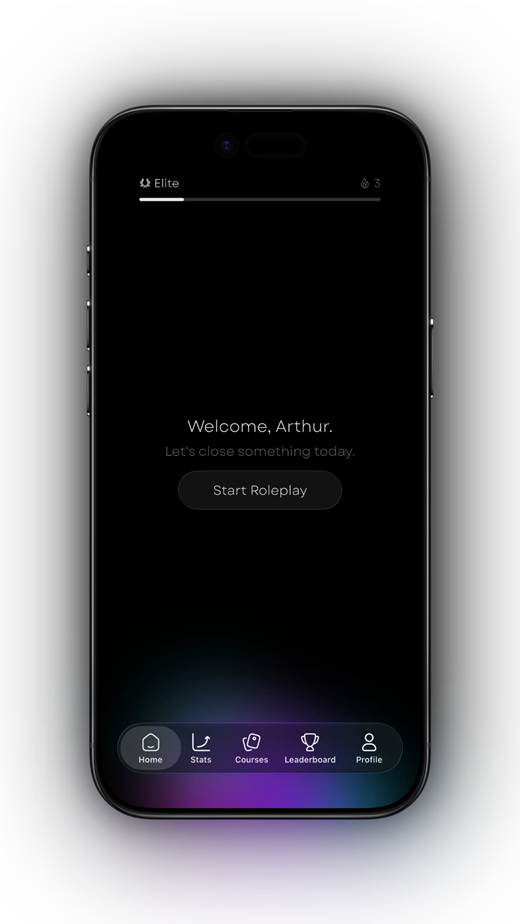
Put one idea from this guide into a spoken practice call. Salesy: AI Sales Roleplay brings lessons, AI voice prospects and post-call feedback to iPhone and iPad. Choose an available scenario and work on your next response.
Get Salesy on the App StoreFree to download. In-app purchases available.